

Why Is Student Stress Increasing in 2026? 7 SHOCKING Truths Parents Must Know
Student life in 2026 looks very different from just a few years ago. Exams and assignments are no longer the only sources of pressure. Today, students are dealing with a mix of technology stress, global competition, financial uncertainty, and mental overload.
This raises an important question: Why Is Student Stress Increasing in 2026?
According to global mental health studies, nearly 60% of students report feeling stressed every single day. While awareness about mental health has improved, the real-life pressure on students continues to grow.
Below are the research-backed reasons explaining Why Is Student Stress Increasing in 2026?, written in clear, human language.
Table of Contents
1. AI and Career Uncertainty: The New Existential Crisis
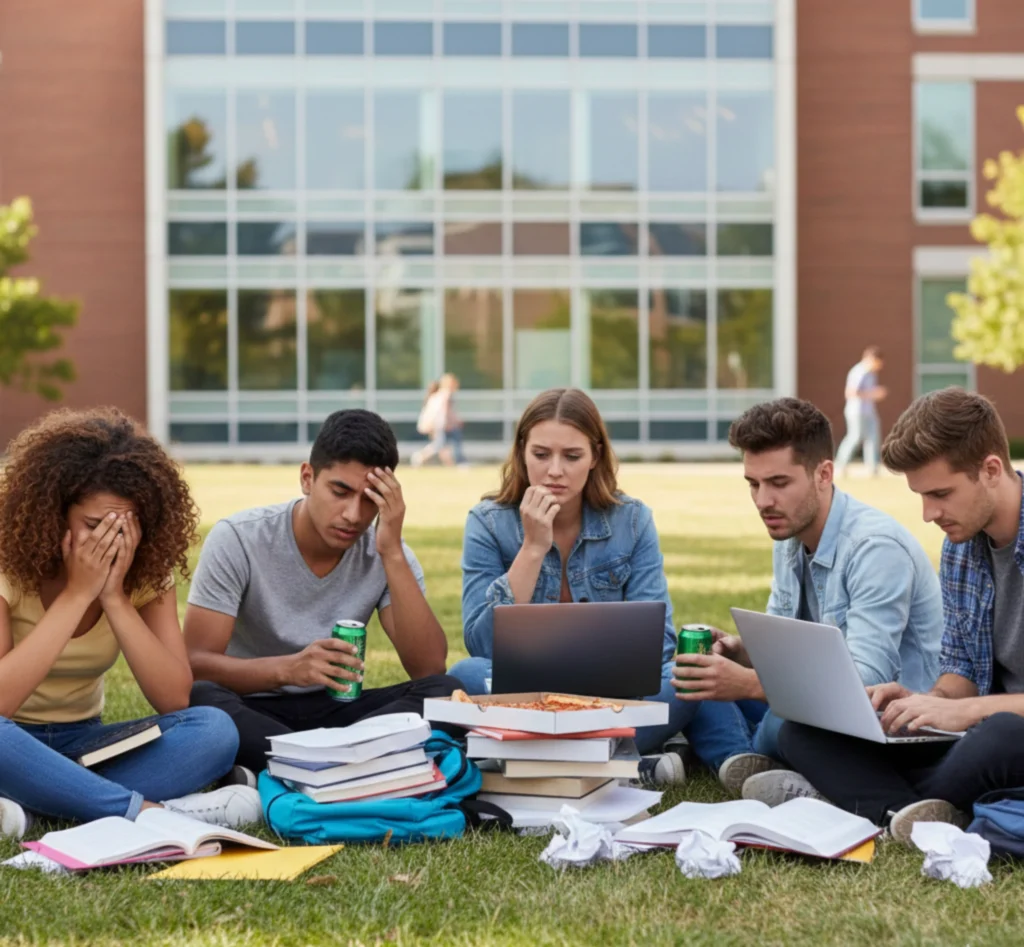
One of the biggest reasons why student stress is increasing in 2026? is fear about the future of work.
Students are no longer competing only with classmates — they are competing with artificial intelligence, which feels unpredictable and fast-moving.
- Job displacement fear:
Many students worry that AI will replace their chosen career paths before they even graduate. For example, students studying basic data entry, content writing, customer support, or accounting fear that automated tools might do these jobs faster and cheaper. This fear makes students question whether their education will still be valuable in a few years. - Skill obsolescence:
There is growing anxiety that a four-year degree cannot keep up with rapid technological changes. A student may start a course thinking it is in demand, only to hear that new AI tools are already doing similar tasks. This creates pressure to constantly learn extra skills alongside regular studies, increasing mental overload. - The race with machines:
This situation creates a feeling that students are always “behind.” Instead of focusing on today’s assignments or exams, many students worry about whether they are learning enough to survive in the future job market. This constant future-stress makes it difficult to stay present, motivated, and confident during their studies.
2. Hyper-Competitive Academic Standards
Another major reason Why Is Student Stress Increasing in 2026? is extreme academic competition.
Academic pressure has always existed, but in 2026 it has reached a level where students feel they must perform perfectly at all times to stay relevant.
Global benchmarking
Students are no longer judged only against classmates or local standards. Even for local internships, scholarships, or college admissions, students are compared with international peers. For example, a student applying for a local internship may compete with candidates who have global certifications or advanced online courses. This constant comparison makes students feel left behind, which explains Why Is Student Stress Increasing in 2026?.
How to overcome this pressure:
Focus on skill-building, not just comparisons
Compete with your past performance, not global rankings
Choose opportunities aligned with your strengths instead of chasing everything
Research statistics
Studies show that over 68% of students feel constant pressure to maintain a perfect GPA. Many students believe that even one low grade can ruin future opportunities. This fear turns learning into stress, clearly showing Why Is Student Stress Increasing in 2026?.
How to overcome this pressure:
Set realistic academic goals, not perfection
Understand that skills + consistency matter more than one grade
Take feedback as guidance, not failure
Early onset
Academic pressure is now affecting younger students as well. Middle schoolers face exams, performance tracking, and early competition. Children who should be exploring interests freely are already stressed about marks, which is another strong reason Why Is Student Stress Increasing in 2026? across all age groups.
How to overcome this pressure:
Encourage learning curiosity, not rank obsession
Balance study time with play and rest
Parents and teachers should reward effort, not just results
3. The Widening Gender Gap in Mental Health
Mental health stress is not evenly distributed.
Girls vs boys: Studies show that around 63% of teenage girls report high stress, compared to 43% of boys. This difference is not about ability—it is about expectations and emotional load.
Perfection pressure: Girls often face stronger expectations, leading to burnout and emotional exhaustion.
Mental health stress is not evenly distributed among students. One important reason Why Is Student Stress Increasing in 2026?is the growing gender gap in emotional pressure.
Why this gap happens:
Girls are often raised to be more responsible, organized, and emotionally aware. In academic environments, this translates into higher pressure to perform well, meet expectations, and avoid mistakes. Many girls feel they must be good students, supportive friends, and emotionally strong at the same time.
Social comparison also affects girls more strongly. Constant exposure to curated social media images and success stories increases self-doubt and perfectionism. Girls are more likely to internalize failure, blaming themselves rather than circumstances, which leads to burnout and emotional exhaustion.
Additionally, girls often receive less emotional reassurance as academic pressure increases. When support feels reduced, stress levels rise further. These combined factors explain why student stress is increasing in 2026, especially among female students.
4. Digital Overload and the “Comparison Trap”
Social media plays a powerful role in Why Is Student Stress Increasing in 2026? . While these platforms were once tools to connect with friends, today many students experience pressure, judgment, and emotional fatigue because of constant digital engagement.
Algorithmic Self-Worth
Students often judge their value based on likes, comments, and follower counts. When feeds show idealized versions of life — perfect grades, exciting events, picture-perfect photos — students begin comparing themselves to these carefully curated images. This comparison can make them feel inadequate, even when their own achievements are real and meaningful.
Research shows that excessive social media use can affect self-esteem and increase feelings of inadequacy.
Recent news: Teaching unions in the UK have urged government action on social media’s effects, calling for restrictions for under-16s, citing concerns that platforms expose children to harmful content that increases anxiety and classroom disruption.
How to overcome it:
Limit time on feeds that trigger comparison
Follow accounts that inspire and educate
Practice self-affirmation before and after social sessions
The Loneliness Paradox

Even though students are “well connected” online, many still feel isolated in real life. Constant scrolling can replace in-person conversations, reducing opportunities for meaningful connection. Some studies suggest that people who use social media more frequently also report higher levels of loneliness and emotional withdrawal.
The irony is that while digital platforms were designed to connect people — especially across distances — many students now feel alone despite being “always online.”
Recent news: Some large research projects in 2026 are questioning the assumption that screen time alone drives mental health issues — emphasizing that the quality of online interactions matters more than time spent scrolling.
How to overcome it:
Schedule daily or weekly “offline meetups” with friends
Join clubs or hobby groups to build real-world connections
Practice digital breaks in the evening or weekends
Cyberbullying: The Invisible Threat
Cyberbullying has become one of the most damaging aspects of social media for students. Unlike traditional bullying, it can happen anywhere, anytime, and follows students home through their devices. Online harassment — including mean comments, exclusion from groups, or spreading rumors — can lead to anxiety, depression, and even trauma symptoms in teens.
Cyberbullying doesn’t only include direct attacks — being left out of group chats, seeing hurtful memes, or being publicly shamed can also contribute to long-lasting emotional stress.
Recent news: A major study found that cyberbullying can trigger PTSD symptoms in adolescents and emphasized that even seemingly minor online harassment carries serious psychological harm.
How to overcome it:
Report abusive behavior immediately
Block or mute harmful users
Talk to a trusted adult or counselor about online harassment
5. The Crushing Weight of Financial Stress
Financial pressure has become unavoidable for students in 2026 and is a major reason Why Is Student Stress Increasing in 2026?, especially at the university level. Rising tuition fees, higher living costs, and uncertainty about future income have made money a constant source of worry.
- Debt anxiety:
Around 32% of students say financial stress is their biggest concern. Many students are anxious about education loans, credit card debt, or relying heavily on family support. The fear of graduating with debt, without guaranteed employment, creates ongoing mental pressure that affects focus, sleep, and motivation. - Work-study imbalance:
To manage expenses, many students work 20 or more hours a week alongside full-time studies. While this helps financially, it often leads to exhaustion, reduced study time, and poor sleep. Balancing deadlines, shifts, and exams leaves little time for rest or social connection, causing chronic fatigue and burnout.
Financial stress doesn’t stay limited to money—it affects mental health, academic performance, and overall well-being. This is why financial pressure is a strong and growing explanation for why student stress is increasing in 2026.
6. The Silent Epidemic of Sleep Deprivation
Sleep loss is one of the most ignored yet powerful reasons why student stress is increasing in 2026. Many students don’t realize that poor sleep is not just making them tired—it is quietly increasing their stress levels every day.
- Shocking reality:
More than 75% of students do not get enough sleep regularly. Late-night studying, scrolling on phones, worrying about exams, and irregular routines make it hard for the brain to rest. Over time, this lack of sleep becomes normal, even though it is harmful. - The stress loop:
Poor sleep increases cortisol, the body’s stress hormone. High cortisol makes daily tasks feel harder, lowers concentration, and increases irritability. This creates a cycle where stress ruins sleep, and lack of sleep increases stress even more. This cycle clearly explains Why Is Student Stress Increasing in 2026?.
Simple Sleep Improvement Tips for Students
Try to sleep and wake up at the same time, even on weekends
Avoid screens at least 30 minutes before bed
Reduce caffeine intake after evening
Keep the bedroom dark, quiet, and cool
Use the bed only for sleep, not studying or scrolling
Small changes in sleep habits can significantly reduce daily stress.
Short Night Routine
| Time | Activity |
|---|---|
| 30 min before bed | Switch off phone or keep it away from bed |
| 20 min before bed | Light stretching or deep breathing |
| 10 min before bed | Write tomorrow’s to-do list (clear the mind) |
| Bedtime | Lights off, slow breathing, no screens |
Following this simple routine helps the brain relax and prepares the body for deep rest.
Improving sleep quality does not require perfection—just consistency. Better sleep supports emotional balance, focus, and resilience, making it a key solution to Why Is Student Stress Increasing in 2026?.
7. Institutional Support Gaps
Even though mental health awareness has increased, actual support systems in many institutions are still limited. This gap between awareness and action is another major reason why student stress is increasing in 2026.
- Counselor shortages:
In many colleges and universities, the number of students is far greater than the number of counselors available. Because of this, students often face waiting periods of 3–6 weeks for counseling sessions. For a student already dealing with stress, anxiety, or burnout, this delay can make them feel ignored and helpless. - Reactive systems:
Most institutions still act only after a student reaches a breaking point. Mental health support often focuses on crisis situations instead of everyday stress management. Preventive steps like regular emotional check-ins, stress education, or mental wellness classes are still missing in many schools and colleges.
Because of these gaps, students are forced to manage stress alone, which strongly explains Why Is Student Stress Increasing in 2026? .
Practical Solutions for Institutions
Increase the number of on-campus counselors and mental health staff
Offer quick-access support like walk-in hours or online counseling
Introduce stress-management workshops as part of the academic schedule
Provide anonymous mental health resources for students who hesitate to speak up
Small institutional changes can make a big difference in student well-being.
Role of Parents and Teachers
Parents and teachers play a crucial role in reducing student stress.
Parents should focus on emotional support, not just grades or results
Teachers should check in on students’ well-being, not only academic performance
Creating an environment where students feel safe to express stress without judgment helps reduce pressure
Encouraging balance between studies, rest, and personal time is essential
Supportive adults can reduce stress even when institutional systems are limited.
Policy-Level Improvements Needed
At a broader level, education policies must prioritize mental health.
Mental health education should be mandatory, not optional
Schools should receive funding specifically for student wellness programs
Student-to-counselor ratios must be regulated and improved
Preventive mental health training should be included from early education
Without strong policy support, institutional gaps will continue, further explaining Why Is Student Stress Increasing in 2026?.
Student Stress Statistics 2026: At a Glance
| Stress Factor | Impact Level | Key Insight |
|---|---|---|
| Academic Pressure | Extreme | 68% feel constant pressure |
| Career Anxiety (AI) | High | Top new stressor in 2026 |
| Social Media Stress | High | 50% feel lonely |
| Financial Burden | Moderate–High | 32% say it’s #1 stress |
| Sleep Deprivation | Very High | 75% lack proper sleep |

Understanding why student stress is increasing in 2026 is important, but real change happens with daily action. Below is a simple 30-day stress reset plan that students can follow step by step to reduce mental overload, improve focus, and regain balance.
30-Day Student Stress Reset Plan
| Day | Focus Area | Daily Action |
|---|---|---|
| Day 1 | Digital Wellness | Turn off non-human notifications (apps, news, shopping). |
| Day 2 | — | Spend 20 minutes offline (book reading or a walk). |
| Day 3 | — | Unfollow 3 social media accounts that trigger self-comparison. |
| Day 4 | — | Charge phone away from bed; avoid doom-scrolling at night. |
| Day 5 | — | Use an AI journaling app to release thoughts safely. |
| Day 6 | — | Eat one meal without using any screen. |
| Day 7 | — | Reflect on how your mind felt with reduced digital noise. |
| Day 8 | Career Confidence | Identify one human-only skill (empathy, creativity, humor). |
| Day 9 | — | Use an AI tool to save 30 minutes of routine work. |
| Day 10 | — | Research how AI supports (not replaces) your career goal. |
| Day 11 | — | Practice single-tasking for 25 minutes without tab switching. |
| Day 12 | — | Talk to a teacher or mentor about future-related fears. |
| Day 13 | — | Write three things you learned that AI cannot “feel.” |
| Day 14 | — | Celebrate a small win not related to grades. |
| Day 15 | Physical Reset | Drink a full glass of water immediately after waking up. |
| Day 16 | — | Practice 4-4-6 breathing three times. |
| Day 17 | — | Take a 15-minute mindful walk noticing sounds and smells. |
| Day 18 | — | Stretch for 5 minutes focusing on neck and shoulders. |
| Day 19 | — | Go to bed 30 minutes earlier than usual. |
| Day 20 | — | Eat a brain-food snack (nuts, berries, dark chocolate). |
| Day 21 | — | Do a brain dump: write worries and tear the paper. |
| Day 22 | Social Connection | Send a thank-you message to someone supportive. |
| Day 23 | — | Give a genuine compliment to a classmate. |
| Day 24 | — | Join an offline group activity or meet friends. |
| Day 25 | Self-Compassion | Speak to yourself like you would to a best friend. |
| Day 26 | Kindness | Do a small act of kindness or volunteer for 30 minutes. |
| Day 27 | Environment | Declutter your study space for mental clarity. |
| Day 28 | Mindfulness | Sit in nature or stargaze for 10 minutes. |
| Day 29 | Reflection | Write a letter to your future self. |
| Day 30 | Review | Review the month and keep the habit that felt best. |
How to Reduce Student Stress: 2026 Solutions
Understanding Why Is Student Stress Increasing in 2026? is only half the solution. Action is equally important.
AI integration: Teach students how to collaborate with AI, not fear it.
Mandatory digital detox: Introduce device-free hours in schools and colleges.
Built-in wellness: Include breathing techniques (like 4-4-6 breathing) and time management in curriculum.
Peer support systems: Strengthen peer-to-peer mental health networks.
Along with managing stress, following a structured daily routine can make a big difference. You can also explore this 24-hour daily routine for students to improve focus, balance studies, and reduce mental overload.
Final Thoughts
The rise in student stress is not a sign of weakness. It is a response to a fast-changing world.
By understanding Why Is Student Stress Increasing in 2026?, parents, teachers, and institutions can take meaningful steps to protect student mental health and build a more balanced future.
Disclaimer: This content is meant for awareness and educational purposes only. For serious mental health concerns, please consult a qualified professional.