
Why White Sugar Is Bad for Health: 5 Healthy Alternatives to White Sugar
Healthy alternatives to white sugar are becoming essential as more people understand how regular sugar intake affects energy, weight, hormones, and long-term health.
White sugar is one of the most commonly used ingredients in daily life. From tea and coffee to desserts, packaged foods, and soft drinks, it is everywhere. However, modern science clearly shows that regular consumption of white sugar can seriously harm both male and female bodies.
In this detailed guide, you will learn:
What white sugar does inside the body
Why it is harmful according to science
How it affects men and women differently
The 5 healthiest alternatives to white sugar with clear explanations
How to reduce sugar safely step by step
Choosing healthy alternatives to white sugar is one of the simplest ways to reduce sugar cravings and protect long-term health.Switching to healthy alternatives to white sugar is a simple step toward better weight control, stable blood sugar, and long-term wellness.
Table of Contents
What Is White Sugar and What Does It Do Inside the Body?
White sugar is a highly refined form of sucrose made from sugarcane or sugar beet. During the refining process, all natural fiber, vitamins, and minerals are completely removed. What remains is a substance that provides only calories without any nutrition, often called empty calories.
What Happens After You Eat White Sugar?
Instant Digestion
Unlike whole foods, white sugar does not require much digestion. As soon as you consume it, it is rapidly absorbed into the bloodstream.Sudden Blood Sugar Spike
White sugar quickly breaks down into glucose, causing a sharp rise in blood sugar levels. This spike gives a short burst of energy, which many people mistake for real strength.Insulin Overload
To control this spike, the pancreas releases a large amount of insulin. Insulin’s job is to move glucose from the blood into the cells for energy.Energy Crash and Cravings
Once insulin lowers blood sugar too fast, the body experiences a sudden drop in energy. This leads to:Fatigue
Hunger soon after eating
Strong cravings for more sugar
Excess Sugar Turns Into Fat
If the body does not immediately use the glucose for energy, it is stored as fat—especially around the belly, hips, and internal organs.Long-Term Damage Over Time
Repeated sugar spikes force insulin to work harder, which can lead to insulin resistance. Over time, this increases the risk of:Type 2 diabetes
Hormonal imbalance
Chronic inflammation
Heart disease
Why the Body Struggles With White Sugar
The human body is designed to process natural sugars that come with fiber, such as fruits. White sugar lacks fiber, so glucose enters the bloodstream too fast, overwhelming the body’s natural balance system.
Why White Sugar Is Bad for Your Health
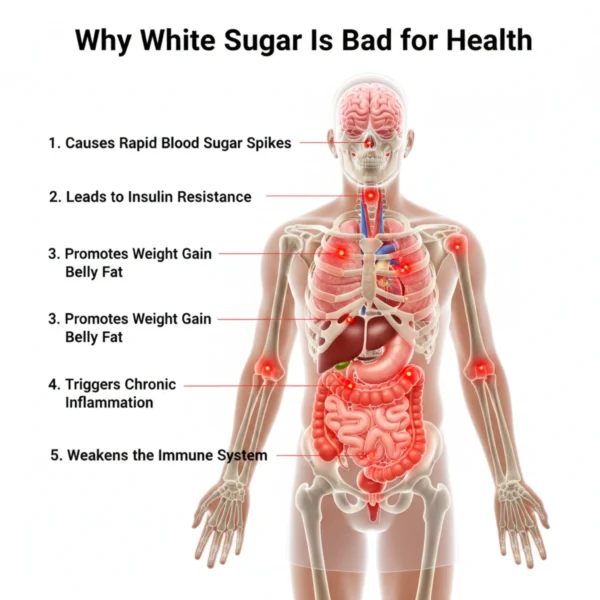
White sugar may seem harmless because it’s part of our daily routine, but inside the body, it creates a chain reaction that slowly affects energy, weight, hormones, and overall health. Let’s understand this step by step, in a simple and practical way.
1. Causes Rapid Blood Sugar Spikes
When you eat white sugar, your body doesn’t have to work much to digest it. There is no fiber to slow things down, so sugar enters your bloodstream very quickly. This causes a sudden rise in blood glucose levels, which may give you a short burst of energy or happiness.
But this feeling doesn’t last.
Soon after, your blood sugar drops sharply—this is what people call a sugar crash. When this happens, you may start to feel:
Tired and drained
Irritable or mentally foggy
Hungry again, especially for sweets
This repeated up-and-down cycle confuses the body and makes you crave more sugar, even when you don’t actually need energy.
2. Leads to Insulin Resistance
Every time your blood sugar rises, your pancreas releases insulin to push glucose into your cells for energy. When you consume white sugar frequently, insulin has to work harder again and again.
Over time, your cells stop responding properly to insulin. This means:
Glucose stays in the bloodstream instead of being used
Blood sugar levels remain high
This condition is called insulin resistance, and it is one of the biggest risk factors for Type 2 diabetes. At this stage, the body is still producing insulin, but it’s no longer working effectively.
3. Promotes Weight Gain and Belly Fat
Your body can only use a limited amount of glucose at one time. When extra sugar is not needed for energy, it doesn’t disappear—it gets stored as fat.
White sugar is especially linked to:
Belly fat accumulation
Visceral fat, which surrounds internal organs
This type of fat is more dangerous than fat under the skin because it interferes with hormones and increases the risk of obesity, fatty liver, and metabolic disorders. Even people who look “thin” can have high visceral fat if their sugar intake is high.
4. Triggers Chronic Inflammation
Excess sugar creates low-grade inflammation in the body. At first, you may not notice it, but over time, this inflammation becomes chronic.
Chronic inflammation is connected to:
Heart disease and high blood pressure
Joint pain and stiffness
Autoimmune conditions
It also makes the body age faster by damaging tissues and organs. Many modern diseases have inflammation as their root cause, and sugar is one of the biggest contributors.
5. Weakens the Immune System
White sugar directly affects how well your immune system works. High sugar levels reduce the ability of white blood cells to kill bacteria and viruses.
As a result:
You may catch colds more often
Infections take longer to heal
You feel low on energy and strength
Even a single high-sugar meal can temporarily reduce immune response for several hours. Over time, frequent sugar intake keeps the immune system in a constantly weakened state.
This is why health experts recommend replacing refined sugar with healthy alternatives to white sugar whenever possible.
Choosing healthy alternatives to white sugar helps reduce hidden sugar intake while supporting long-term health.
Impact of White Sugar on the Male Body
Understanding the impact of sugar makes it clear why switching to healthy alternatives to white sugar matters for daily energy and performance.
Many men don’t realize how much white sugar affects their energy, strength, and long-term health. It doesn’t cause damage overnight, but with regular intake, its effects quietly build up. Here’s how white sugar impacts the male body in everyday life.
1. Reduced Energy and Stamina
White sugar gives a quick energy boost, but it’s temporary. After eating sugary foods or drinks, blood sugar rises fast and then crashes just as quickly. This sudden drop leaves the body feeling exhausted.
Over time, this leads to:
Constant tiredness even after resting
Low stamina during workouts or physical tasks
Feeling drained halfway through the day
In real life:
A man who starts his day with sweet tea, biscuits, or sugary breakfast cereal may feel energetic for an hour, but by mid-morning, he feels tired and unfocused. This is not because he worked hard—it’s because of the sugar crash.
2. Increased Belly Fat
Excess white sugar is closely linked to fat storage, especially around the waist. When sugar intake is high, the body releases more insulin, which encourages fat storage instead of fat burning.
At the same time, high sugar consumption can lower testosterone levels, a hormone essential for muscle mass, fat control, and overall male vitality.
This results in:
Growing belly fat despite normal eating
Loss of muscle definition
Slower metabolism
A common situation is:
Many men notice that even though they don’t eat large meals, their waist size keeps increasing. Hidden sugar in soft drinks, desserts, and packaged foods is often the main reason.
3. Higher Risk of Heart Disease
White sugar directly affects heart health by increasing levels of triglycerides and bad cholesterol (LDL) in the blood. Over time, this leads to plaque buildup in the arteries, making it harder for blood to flow smoothly.
This increases the risk of:
High blood pressure
Heart attacks
Stroke
For instance:
Regular consumption of sugary drinks like sodas or energy drinks can raise heart disease risk even in men who are not overweight. Sugar affects the heart silently before symptoms appear.
4. Poor Mental Focus and Productivity
The brain depends on stable blood sugar levels to function properly. White sugar disrupts this balance, leading to mental ups and downs throughout the day.
Common effects include:
Difficulty concentrating
Forgetfulness
Reduced productivity at work
Example:
A man who relies on sugary snacks or drinks to stay alert at work may feel sharp for a short time, but soon experiences brain fog and distraction. This makes it harder to focus on tasks or make decisions.
Daily Sugar Intake Chart for Men
Reality vs Recommendation
| Food / Drink | Sugar Used / Hidden | Sugar Calories (Approx.) |
|---|---|---|
| Sweet Tea – 2 cups | 2 tsp per cup = 4 tsp | 80 kcal |
| Biscuits – 4 pieces | Hidden sugar | 160 kcal |
| Packaged Fruit Juice – 1 glass | Hidden sugar | 150 kcal |
| Soft Drink – 1 can | 8 tsp sugar | 140 kcal |
| Chocolate / Sweet Snack | 6 tsp sugar | 200 kcal |
| Sweetened Yogurt | Hidden sugar | 120 kcal |
| Ice Cream – 1 scoop | 5 tsp sugar | 150 kcal |
Total Sugar Calories Consumed (Without Realizing)
= 1,000 Sugar Calories in ONE Day Unlike refined sugar, healthy alternatives to white sugar provide sweetness with fewer harmful effects.
How Many Teaspoons sugar Should You Use Instead?
| Item | Current Use | Should Be |
|---|---|---|
| Tea / Coffee (per cup) | 2 tsp | ½ tsp or none |
| Daily total sugar | 25–30 tsp | Max 9 tsp (from all sources) |
| Soft drinks | 1 can | 0 (avoid) |
| Packaged juice | 1 glass | 0 (whole fruit instead) |
| Sweets / desserts | Daily | 1–2 times per week (small portion) |
| Daily Sugar Limit (Men) | Calories | Sugar in Teaspoons |
|---|---|---|
| Recommended Maximum | 150 kcal | 9 teaspoons (total) |
Reality:
Most men consume 25–30 teaspoons of sugar daily
That’s 3× more than the safe limit This is why switching to healthy alternatives to white sugar is strongly recommended for long-term health.
Important Thing Most Men Don’t Realize
Even if you don’t add sugar directly:
Packaged foods
Biscuits
Drinks
Yogurt
Snacks
Automatically add sugar spoons to your daily total.
According to the American Heart Association (AHA), adult men should limit added sugar to no more than about 9 teaspoons (36 grams or 150 calories) per day for better heart and overall health.
Rule Easy to Follow
If you take sugar in tea → avoid sugary snacks
If you eat dessert → no sugar in drinks
If you drink soft drinks → sugar limit already crossed

Impact of White Sugar on the Female Body
For women especially, choosing healthy alternatives to white sugar can support hormonal balance and overall well-being.
Many women don’t realize how strongly white sugar affects their hormones, weight, skin, and emotional health. The damage doesn’t happen suddenly, but with regular intake, sugar slowly interferes with the body’s natural balance. Over time, these effects start showing up in everyday life.
Here’s how white sugar impacts the female body.
1. Hormonal Imbalance
White sugar directly disrupts hormonal balance by repeatedly spiking insulin levels. In women, insulin imbalance affects other key hormones, especially estrogen and progesterone.
With frequent sugar intake, the risk increases for:
PCOS (Polycystic Ovary Syndrome)
Irregular or missed periods
Fertility issues
When hormones are out of balance, the body struggles to regulate cycles, ovulation, and overall reproductive health.
In everyday life:
Many women experience delayed periods, painful cycles, or PCOS symptoms without realizing that regular sugar intake—from sweets, sugary drinks, or packaged foods—may be worsening the problem.
2. Weight Gain (Especially in Hips, Thighs, and Belly)
Women’s bodies are naturally designed to store fat differently than men. When excess white sugar is consumed, it is more likely to be stored as fat around:
Hips
Thighs
Lower abdomen
Sugar-driven insulin spikes signal the body to store fat instead of burning it. Over time, this leads to steady weight gain, even when meal portions are controlled.
A common situation:
Many women eat home-cooked meals and avoid heavy food, yet still struggle with weight gain. Hidden sugar in tea, snacks, desserts, and packaged foods often plays a bigger role than they realize.
3. Skin Problems and Early Aging
Sugar has a direct effect on skin health. It damages collagen and elastin, the proteins responsible for keeping skin firm, smooth, and youthful.
As a result, high sugar intake can lead to:
Acne and breakouts
Dull, tired-looking skin
Fine lines and wrinkles appearing earlier
This process, called glycation, makes skin lose elasticity faster and accelerates visible aging.
What many women notice:
Even with skincare products and treatments, skin issues persist. Diet—especially sugar intake—is often the missing link.
4. Mood Swings, PMS, and Sugar Cravings
White sugar strongly affects mood because it interferes with blood sugar stability and brain chemicals linked to emotions.
In women, high sugar intake can:
Worsen PMS symptoms
Increase anxiety and irritability
Trigger emotional eating and cravings
Sugar creates a cycle where mood dips lead to cravings, and cravings lead to more sugar—making emotional balance harder to maintain.
In daily life:
During PMS or stressful days, cravings for sweets increase. While sugar may feel comforting for a short time, it often leads to mood crashes and increased fatigue later.
The chart below shows why replacing sugar with healthy alternatives to white sugar makes a real difference.
Daily Sugar Intake Chart for Women
Reality vs Recommendation
| Food / Drink | Sugar Used / Hidden | Sugar Calories (Approx.) |
|---|---|---|
| Sweet Tea / Coffee – 2 cups | 2 tsp per cup = 4 tsp | 80 kcal |
| Biscuits / Cookies – 3–4 pieces | Hidden sugar | 140 kcal |
| Packaged Fruit Juice – 1 glass | Hidden sugar | 150 kcal |
| Flavored Yogurt | Hidden sugar | 120 kcal |
| Chocolate / Sweet Snack | ~5 tsp sugar | 180 kcal |
| Ice Cream / Dessert – small portion | ~4 tsp sugar | 140 kcal |
| Sweet Breakfast Cereal / Granola | Hidden sugar | 130 kcal |
Total Sugar Calories Consumed daily
= 900–1,000 sugar calories in ONE day Reducing white sugar and choosing healthy alternatives to white sugar can help stabilize energy and hormones.
How Many Teaspoons Sugar Should Women Use Instead?
| Item | Current Use | Should Be |
|---|---|---|
| Tea / Coffee (per cup) | 2 tsp | ½ tsp or none |
| Daily total sugar | 18–24 tsp | Max 6 tsp (all sources combined) |
| Packaged juice | 1 glass | 0 (choose whole fruit) |
| Flavored yogurt | Daily | Plain yogurt + fruit |
| Sweets / desserts | Daily / often | 1–2 times per week (small portion) |
What a Woman Should Actually Consume in a Day
| Daily Sugar Limit (Women) | Calories | Sugar in Teaspoons |
|---|---|---|
| Recommended Maximum | 100 kcal | 6 teaspoons (Total ) |
Reality
Most women consume 18–24 teaspoons of sugar daily
That’s 3–4× more than the safe limit
According to the American Heart Association (AHA),
Women should limit added sugar to no more than 6 teaspoons (25 grams or 100 calories) per day for better hormonal balance, heart health, and overall well-being.
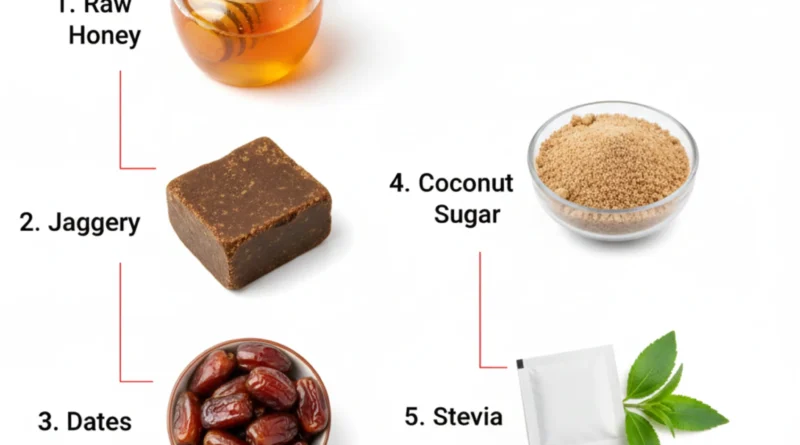
5 Healthy Alternatives to White Sugar That Are Better for Your Health
Cutting down on white sugar doesn’t mean giving up sweetness completely. There are several natural alternatives that not only satisfy sweet cravings but also offer added health benefits. The key is choosing the right option and using it in moderation.
Here are five healthier alternatives to white sugar, explained in a simple, practical way.These healthy alternatives to white sugar provide sweetness without the harmful effects of refined sugar.
1. Raw Honey
These healthy alternatives to white sugar offer natural sweetness without the harmful effects of refined sugar.
Raw honey is one of the most popular natural sweeteners, and for good reason. Unlike white sugar, it contains antioxidants, enzymes, and small amounts of vitamins that support overall health.
It provides quick natural energy, which makes it a good option when you need a gentle energy boost without a harsh sugar crash.
Best ways to use it:
In tea or warm water
In homemade desserts
As a natural sweetener for sauces or dressings
Important note:
Honey is still a form of sugar, so moderation matters. A small amount goes a long way.
2. Jaggery
Jaggery is an unrefined sweetener made from sugarcane or palm sap. Unlike white sugar, it retains natural minerals such as iron, magnesium, and potassium.
It is known to support digestion and help the body remove toxins, especially when consumed in small amounts after meals.
Best ways to use it:
In cooking and traditional recipes
In tea instead of refined sugar
In homemade sweets
Because jaggery is minimally processed, it is a healthier option compared to white sugar, especially for daily use in small quantities.
3. Dates
Dates are a naturally sweet fruit packed with fiber, minerals, and antioxidants. The fiber content helps slow down sugar absorption, preventing sudden spikes in blood sugar.
They provide steady energy and keep you full for longer, making them a great alternative for people trying to reduce sugar cravings.
Best ways to use them:
In smoothies
In desserts as a natural sweet base
In energy balls or healthy snacks
When eaten in limited portions, dates are a safer option for blood sugar compared to refined sugar.
4. Coconut Sugar
Coconut sugar is made from the sap of coconut palm trees. It has a lower glycemic index than white sugar, which means it raises blood sugar more slowly.
It also contains trace minerals and has a taste very similar to regular sugar, making it easier to switch without feeling deprived.
Best ways to use it:
In baking
In coffee or tea
In recipes where white sugar is usually used
For many people, coconut sugar feels like the closest natural replacement for white sugar in terms of taste.
5. Stevia
Stevia is a plant-based sweetener that contains zero calories and does not raise blood sugar levels. This makes it especially useful for people managing diabetes or trying to lose weight.
Since it is much sweeter than sugar, only a very small amount is needed.
Best ways to use it:
In beverages
In weight-loss friendly recipes
In diabetic-friendly diets
The taste may feel slightly different at first, but most people adjust to it over time. Among all options, healthy alternatives to white sugar work best when used in moderation and combined with a balanced diet.
Which Sugar Alternative Should You Choose?
For weight loss: Stevia
For daily use: Coconut sugar or jaggery
For energy: Dates or honey
For diabetes: Stevia or dates (controlled portions)
How to Reduce White Sugar Step by Step
Reduce sugar gradually instead of quitting suddenly
Avoid packaged and processed foods
Replace sugar with natural alternatives slowly
Read food labels carefully
Allow taste buds 7–10 days to adapt
Conclusion
White sugar may taste good, but its long-term effects on health are harmful for both men and women. From hormonal imbalance and weight gain to diabetes and heart disease, the risks are real and scientifically proven.
Switching to healthy alternatives to white sugar can significantly improve:
Energy levels
Hormonal balance
Skin health
Weight control
Overall well-being
Small changes today can protect your health for years to come.Switching to healthy alternatives to white sugar can help improve energy levels, control weight, balance hormones, and support overall well-being.
Making small daily changes by using healthy alternatives to white sugar can protect your health over time.
Why is white sugar bad for your health?
White sugar causes rapid spikes in blood sugar levels, leading to insulin resistance, weight gain, inflammation, and increased risk of diabetes and heart disease. It provides empty calories with no nutritional benefits and weakens long-term metabolic health.
What is the healthiest alternative to white sugar?
The healthiest alternative depends on your goal:
Stevia for weight loss and diabetes
Dates for natural energy and fiber
Coconut sugar for daily use
All of these are healthier than refined white sugar when used in moderation.
Can replacing white sugar improve overall health?
Yes. Replacing white sugar with natural alternatives can improve energy levels, hormonal balance, digestion, skin health, and reduce the risk of chronic diseases like obesity and diabetes.
Does white sugar affect men and women differently?
Yes.
In men, white sugar increases belly fat, lowers testosterone, and raises heart disease risk.
In women, it disrupts hormones, worsens PMS and PCOS symptoms, causes weight gain, and accelerates skin aging.
Is white sugar more harmful than natural sweeteners?
Yes. White sugar is highly refined and stripped of nutrients, while natural sweeteners like honey, dates, and jaggery contain minerals, antioxidants, or fiber that reduce their negative impact on the body.
Is it safe to completely stop eating white sugar?
Yes, it is safe. The body does not need refined sugar to function. Natural sugars from fruits, vegetables, and healthy sweeteners are enough to meet energy needs. if having any questions regarding this do comment below!