
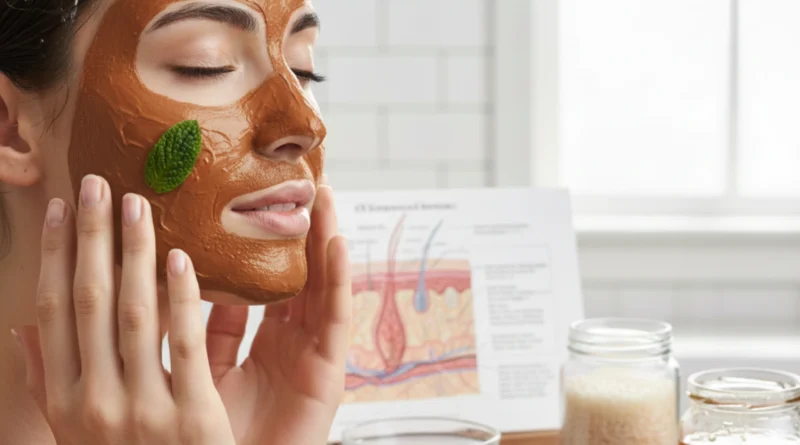
Viral Face Mask Homemade Recipes: Dangerous Myths, Real Risks and Safe Use
Social media is flooded with viral face mask homemade recipes that promise glowing skin, clear pores, and instant results. From Instagram reels to TikTok tutorials, these DIY masks appear simple, affordable, and very tempting. Most videos show quick before-and-after results, making it seem like these masks work magically for everyone.
Many viral face mask homemade recipes go viral without explaining their long-term impact on skin health.
But here’s the truth most posts don’t tell you:
Not every viral face mask is safe for every skin type.
Some viral masks may give temporary cosmetic improvement, while others can silently damage your skin barrier, trigger acne, worsen sensitivity, or cause irritation—especially when they are used without understanding skin type, ingredient behaviour, or risks.
In this guide, we break down two of the most viral face mask homemade recipes circulating online today. This article explains:
What these masks actually do
Why they look effective on camera
Who they may help (temporarily)
Who should strictly avoid them
How to reduce harm if someone still chooses to try
This is not hype content. This is honest, research-aware skincare education meant to protect your skin.
Table of Contents
Why Viral Face Mask Spread So Fast
Viral DIY face masks spread quickly because they check all the boxes that social media loves: This is exactly why viral face mask should be understood carefully before trying them.
They use familiar kitchen ingredients, so they feel safe
Ingredients like rice, honey, cocoa, or spices feel harmless because people already use them in food. This creates a false sense of safety, even though facial skin reacts very differently than the digestive system.They look natural and chemical-free, which builds false trust
Words like “natural,” “DIY,” and “chemical-free” make people assume these masks are gentle. In reality, natural ingredients can still be strong irritants when applied directly to the skin.They show instant glow visuals, perfect for short videos
Many viral masks remove oil or increase blood flow quickly. This creates temporary brightness or redness that looks like glow on camera, even though it may not be real skin improvement.They are easy to copy without guidance or testing
Most videos skip important details like skin type, exact quantities, or patch testing. Viewers copy the recipe immediately, without understanding how their own skin might react.
However, viral does not mean dermatologist-approved.
Popularity on social media is driven by views and engagement, not by safety testing or research.
Most viral homemade face mask recipes are based on:
Short-term cosmetic effects, not long-term skin health
Personal user experiences, not clinical or dermatological research
Influencer skin types, which may be very different from yours
This is why understanding both the potential benefits and the possible risks is extremely important before trying anything on your face.
This is why understanding both benefits and risks is extremely important before trying anything on your face.
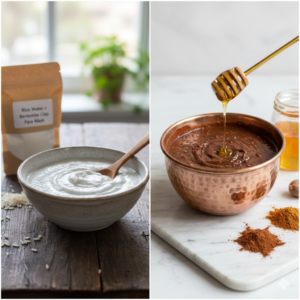
Viral Mask 1: Rice Water + Bentonite Clay Face Mask
What This Mask Is
This mask combines cloudy rice water (the starchy water left after soaking rice) with bentonite clay, a natural clay known for absorbing oil and impurities. Because both ingredients are inexpensive, easy to find, and appear natural, this mask is widely promoted as a quick solution for common skin problems.
It is commonly advertised as a solution for:
Brightening dull skin – rice starch leaves a soft finish
Tightening pores – clay tightens as it dries
Controlling oil – bentonite clay absorbs excess sebum
On camera, this mask often gives instant visible results, which makes it look extremely effective and trustworthy.
Why It Went Viral
Rice water has been used traditionally for hair rinses and sometimes for cleansing skin. It contains starch, amino acids, and trace nutrients that can make skin feel smooth immediately after rinsing.
Bentonite clay is widely known in skincare for its ability to absorb oil and surface impurities. When applied, it dries and tightens the skin, creating an instant matte and smooth look.
When combined, users often notice:
Temporary oil control
Smooth skin texture
Short-term brightness
These quick results are ideal for social media videos, which is why this mask became viral face mask.
Ingredients
Informational only — not a recommendation.
Cloudy rice water: 2 teaspoons
Bentonite clay (cosmetic grade): ½ teaspoon
Using more clay increases dryness and barrier damage.
Method (How It Is Commonly Prepared)
Rice is soaked in clean water and stirred gently.
The cloudy starchy water is separated.
½ teaspoon bentonite clay is mixed with 2 teaspoons rice water to form a thin paste.
Thick paste increases irritation risk.
How It Is Applied (If Someone Chooses to Try)
Harm-reduction guidance only.
Apply a thin layer on clean skin
Avoid eyes and lips
Leave on until slightly dry (not cracked)
Rinse gently with lukewarm water
Apply moisturizer immediately
Potential Benefits
May help absorb excess oil
Bentonite clay is highly absorbent and pulls excess oil from the skin’s surface. This can reduce shine for a short period, especially on oily areas like the forehead, nose, and chin. The effect is temporary and lasts only until the skin produces oil again.
Skin can feel smoother temporarily
Rice starch lightly coats the skin after rinsing, which can make the surface feel soft and smooth to the touch. This smoothness is short-lived and does not change the skin’s actual texture or repair damage.
Pores may look smaller for a few hours
As the clay dries, it tightens the skin slightly. This tightening effect can make pores appear smaller, but it is only a visual illusion. Once the skin relaxes and oil returns, pores look the same as before.
Gives a “clean” skin sensation
The removal of oil and residue creates a fresh, squeaky-clean feeling that many people associate with effectiveness. However, this sensation does not mean the skin is healthier—it simply means surface oils have been removed.
Important Note
These effects are purely cosmetic and temporary.
They do not repair skin, treat acne, or permanently improve pores.
The Hidden Risks You Must Know
This is the part most viral posts completely ignore.
While these masks look harmless and effective on camera, they come with risks that are rarely mentioned in viral videos.
Not fungal-acne safe
Rice starch can act as a food source for yeast that lives on the skin. For people prone to fungal acne, this can lead to increased breakouts, itching, and flare-ups instead of improvement.
Fermentation risk
Rice water ferments very quickly, especially when stored or refrigerated. Fermented rice water can irritate the skin, disrupt its balance, and increase the chances of redness, breakouts, or inflammation.
Barrier damage
Bentonite clay is extremely absorbent. While it removes oil, it can also strip away the skin’s natural protective oils. Over time, this weakens the skin barrier, making the skin more vulnerable to irritation and environmental damage.
Dryness & sensitivity
Repeated use can leave the skin feeling tight, dry, or uncomfortable. For some people, this dryness may progress into redness, flaking, or increased sensitivity to products that were previously well tolerated.
Repeated use may cause tightness, redness, and flaking.
Not all viral face mask are suitable for every skin type, especially when used repeatedly.
If Someone Still Chooses to Try It (Safer Use)
Not a recommendation. Only harm reduction.
Use fresh rice water only
Never store or refrigerate
Use minimal clay
Limit to once every 2–3 weeks
Patch test for 48 hours
Moisturize immediately after
Viral Mask 2: Cinnamon + Nutmeg + Cocoa + Honey Face Mask
What This Mask Is
This is one of the most shared viral face mask, made by mixing cinnamon powder, nutmeg powder, cocoa powder, and honey. On social media, it is commonly promoted as a “detox mask,” an “acne-fighting treatment,” or a quick “instant glow” solution.
Honey is added because it is widely known for its antibacterial and soothing reputation. Cocoa powder is included for its antioxidant content and smooth texture. Cinnamon and nutmeg are used to create a strong warming and tingling sensation, which many people mistake as a sign that the mask is actively working on the skin.
However, this sensation is often a result of skin irritation rather than true skin improvement, which is an important distinction that is rarely explained in viral content.
Why It Went Viral
Cinnamon increases blood flow to the skin, which causes tingling, warmth, and visible redness almost immediately after application. On camera, this redness often appears as a healthy glow, especially under good lighting and filters.
Short videos usually capture only this immediate reaction, making the mask seem effective and exciting. However, these clips rarely show what happens later, such as irritation, sensitivity, or breakouts that can appear hours or even days after use. This delayed damage is why the mask continues to look appealing online despite its risks.
Ingredients
Informational only.
Cinnamon powder: 1/16 teaspoon (pinch)
Nutmeg powder: 1/16 teaspoon (pinch)
Cocoa powder: ½ teaspoon
Honey: 1 teaspoon
Even small increases in cinnamon raise burn risk.
Method (How It Is Commonly Prepared)
Cinnamon and nutmeg are mixed together.
Cocoa powder is added.
Honey is mixed in to form a thick paste.
Measurements are often eyeballed in videos, increasing danger.
How It Is Applied (If Someone Chooses to Try)
Informational only.
Applied in a very thin layer
Avoid eyes and lips
Left on for 2–5 minutes
Washed off when tingling starts
Burning is already a sign of irritation.
Potential Benefits (Short-Term Only)
Temporary flushed appearance
Cinnamon increases blood circulation near the skin’s surface, which causes redness and a flushed look. This can appear as glow for a short time, but it fades once blood flow returns to normal.
Mild surface hydration from honey
Honey can help retain moisture on the surface of the skin, making it feel slightly soft and hydrated immediately after use. However, this effect is temporary and does not improve the skin barrier or treat underlying skin issues.
Warm sensation mistaken as “active”
The warmth and tingling caused by cinnamon often feel intense, leading people to believe the mask is working. In reality, this sensation is a sign of irritation, not skin repair or nourishment.
Important Note:
This glow comes from irritation and increased blood flow, not from healing or long-term skin improvement.
The Hidden Risks You Must Know
❗ Strong skin irritation
❗ Contact dermatitis
❗ Inflammation-based pigmentation
❗ Acne, eczema & rosacea flare-ups
❗ Long-term skin sensitivity
Because of these risks, dermatologists consistently warn against using cinnamon on facial skin, particularly in homemade masks that are not professionally formulated or tested.
If Someone Still Chooses to Try It
Risk remains high.
Patch test for 48 hours
Never exceed listed quantities
Do not exceed 2–3 minutes
Wash off immediately if stinging occurs
Never repeat if reaction happens
Who Should NEVER Try This Mask
🚫 Sensitive skin
🚫 Acne-prone skin
🚫 Rosacea
🚫 Eczema
🚫 Barrier-damaged skin
🚫 First-time DIY users
Risk is far greater than benefit.
Why It Still Goes Viral Despite Risks
Tingling feels “active” – the sensation makes people believe the mask is working.
Redness looks like glow on camera – flushed skin appears bright under lighting and filters.
Short videos hide delayed reactions – they only show immediate results, not what happens later.
Influencers don’t show aftermath – irritation or damage is rarely shared.
Reactions often appear 24–72 hours later – redness, sensitivity, or breakouts can show up much later.
Reactions often appear 24–72 hours later.
Patch Testing: NON-NEGOTIABLE
How to Patch Test Properly
Clean inner forearm or behind ear
Apply small amount
Leave for 24–48 hours
Observe closely
Stop Immediately If You Notice
Stinging
Rash
Swelling
Burning
Disclaimer
This article is for educational purposes only.
viral face mask are not medical treatments and are not suitable for everyone.
Consult a professional for persistent skin issues.
viral face mask should never replace a proper, skin-type-based skincare routine.
Q1: Are viral homemade face mask recipes safe?
Some may give temporary cosmetic effects, but many carry irritation risks and are not suitable for all skin types.
Can rice water cause acne?
Yes, especially for fungal-acne-prone skin or when rice water ferments.
Is cinnamon safe for facial skin?
No. Dermatologists warn that cinnamon can cause burns, irritation, and dermatitis.
How often can DIY masks be used?
At most once every few weeks, and only after patch testing.
Why do these masks look effective on camera?
Because redness, tightness, and oil removal create short-term visual effects.