
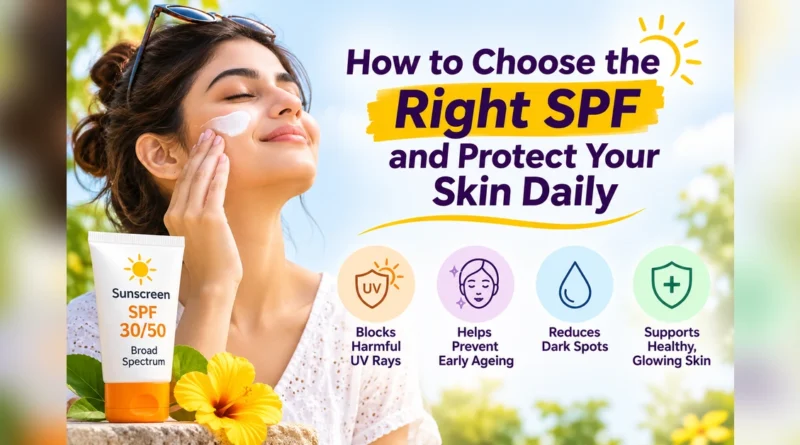
7 Powerful Tips Sunscreen for All Skin Types How to Choose the Right SPF and Protect Your Skin Daily
Table of Contents
Introduction: Why Is Sunscreen Important for Healthy Skin? Know 7 Powerful tips
Healthy, glowing skin is not just about using expensive skincare products or following complicated beauty routines. Sometimes, the most important step is also the simplest one: applying sunscreen every day.
Whether you have oily, dry, combination or sensitive skin, Sunscreen for all skin types plays an essential role in protecting your skin from harmful ultraviolet (UV) radiation. Regular exposure to sunlight can contribute to sunburn, premature ageing, dark spots, uneven skin tone and an increased risk of skin cancer.
Many people believe sunscreen is necessary only during summer or when spending several hours outdoors. However, UV exposure can happen during everyday activities, including walking, driving and sitting near windows.
The good news is that choosing the right sunscreen does not have to be complicated. Once you understand SPF, broad-spectrum protection and your skin type, you can build a simple routine that supports healthier-looking skin.
In this guide, we will explain how sunscreen works, how to choose the right formula and how to apply it correctly for effective daily protection.
1. What Is Sunscreen and How Does It Work?
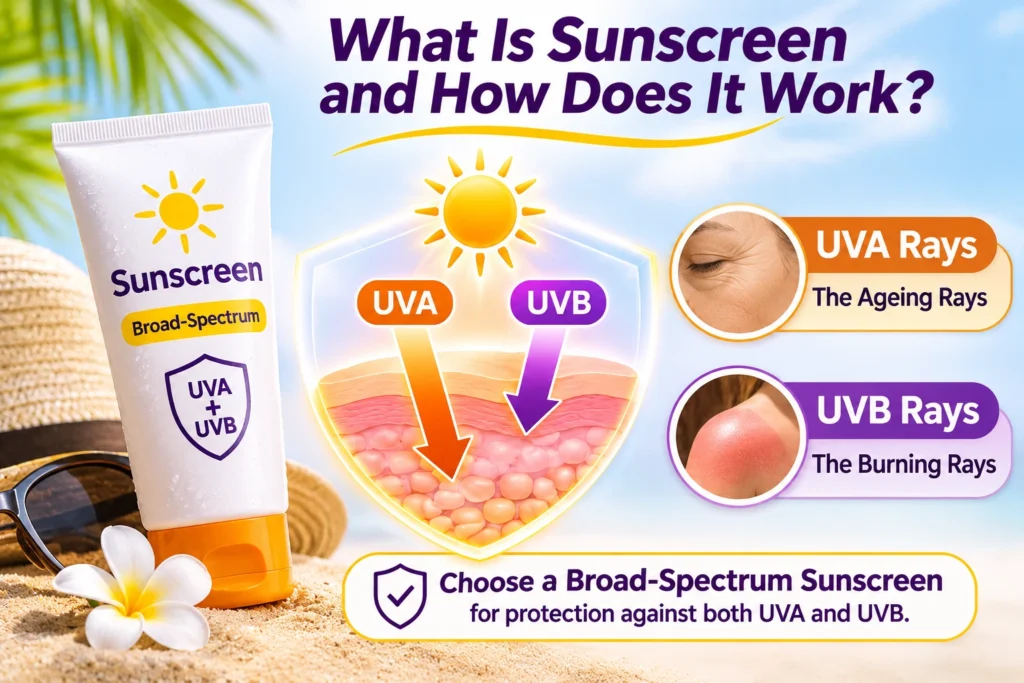
Sunscreen is a skincare product designed to protect your skin from ultraviolet radiation produced by the sun. It contains UV-filtering ingredients that help reduce the amount of harmful radiation reaching your skin.
UVA Rays: The Ageing Rays
UVA rays penetrate deeper into the skin and contribute to premature ageing. Long-term exposure can contribute to:
Fine lines and wrinkles.
Dark spots and pigmentation.
Loss of skin elasticity.
Uneven skin tone.
UVB Rays: The Burning Rays
UVB rays primarily affect the outer layers of the skin and are a major cause of sunburn. Excessive exposure also contributes to skin cancer risk.
This is why choosing a broad-spectrum sunscreen is important. Broad-spectrum protection helps protect against both UVA and UVB radiation.
2. Understanding SPF: SPF 30 vs SPF 50
One of the most common questions people ask is whether SPF 30 is enough or whether they should choose SPF 50. SPF stands for Sun Protection Factor. It measures protection against sunburn-causing UVB radiation under standard testing conditions.
| Sunscreen | Approximate UVB Protection |
| SPF 15 | 93% |
| SPF 30 | 97% |
| SPF 50 | 98% |
Both SPF 30 and SPF 50 offer useful protection when applied correctly. SPF 50 provides slightly higher UVB protection, but no sunscreen blocks 100% of UV radiation.
Which one should you choose?
SPF 30: A practical minimum for everyday sun protection.
SPF 50: A useful choice when you want higher labelled protection, particularly during prolonged outdoor exposure.
Remember that a higher SPF does not mean you can stay in the sun all day without reapplying sunscreen.
3. How to Choose Sunscreen According to Your Skin Type
Not every sunscreen feels the same on every person’s skin. Choosing a suitable texture and formulation can make your daily skincare routine more comfortable.
A. Sunscreen for Oily Skin
People with oily skin often experience excess shine, greasy textures and clogged pores. Look for:
Lightweight gel or fluid formulations.
Oil-free options.
Non-comedogenic products.
Matte or natural-finish sunscreen.
A lightweight sunscreen can make daily application more comfortable without adding an unnecessarily heavy feeling.
B. Sunscreen for Dry Skin
Dry skin needs additional moisture and a comfortable formulation. Look for:
Cream-based sunscreen.
Hydrating ingredients such as glycerin.
Moisturising formulations.
Fragrance-free options if your skin is sensitive.
A moisturising sunscreen can help combine hydration and sun protection in one convenient step.
C. Sunscreen for Combination Skin
Combination skin usually has an oily T-zone and relatively dry cheeks. Consider:
Lightweight lotion-based formulas.
Non-comedogenic products.
Hydrating but non-greasy textures.
Choose a balanced formulation that feels comfortable across different areas of your face.
D. Sunscreen for Sensitive Skin
Sensitive skin may react to certain fragrances, preservatives or sunscreen ingredients. Consider:
Fragrance-free formulations.
Mineral sunscreens containing zinc oxide or titanium dioxide.
Products designed for sensitive skin.
Introduce a new product carefully. If irritation continues, discontinue it and seek advice from a dermatologist.
E. Sunscreen for Acne-Prone Skin
People with acne-prone skin should look for sunscreen that offers protection without feeling excessively heavy. Useful label descriptions include:
Non-comedogenic.
Oil-free.
Lightweight.
Suitable for acne-prone skin.
Remember that sunscreen does not treat acne, but selecting a suitable formula can help you maintain sun protection without unnecessarily aggravating your skincare concerns.
4. Mineral Sunscreen vs Chemical Sunscreen: Which Is Better?
When shopping for sunscreen, you will often come across two main categories: mineral and chemical sunscreen. Understanding the difference can help you make a more informed choice.
Mineral Sunscreen
Mineral sunscreen uses active ingredients such as zinc oxide and titanium dioxide. Potential advantages include:
- Often suitable for sensitive skin.
- Available in different textures and finishes.
- Can provide broad-spectrum protection when appropriately formulated.
Some mineral sunscreens may leave a visible white cast, particularly on deeper skin tones. Tinted formulations may help reduce this issue.
Chemical Sunscreen
Chemical sunscreens use organic UV-filtering ingredients to absorb UV radiation. Potential advantages include:
- Lightweight formulations.
- Easy-to-spread textures.
- Less visible residue in many formulations.
- Convenient options for everyday use.
Some people may experience irritation from particular ingredients, so checking the product label is important.
Which sunscreen is better?
Neither category is automatically better for everyone. The right choice depends on your skin’s needs, product formulation and personal comfort. The most important features are broad-spectrum protection, SPF 30 or higher and water resistance when needed.
5. How to Apply Sunscreen Correctly for Maximum Protection
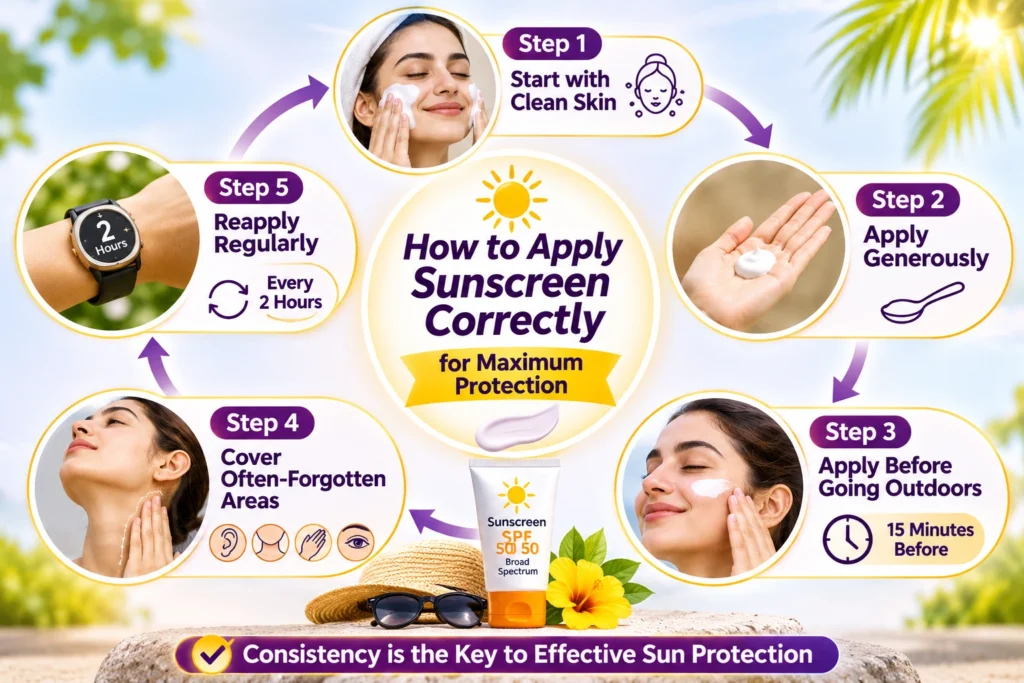
Even a good sunscreen may not provide its labelled level of protection if you apply too little or use it incorrectly. Follow these simple steps:
Step 1: Start with Clean Skin
Wash your face using a gentle cleanser and follow your regular moisturising routine.
Step 2: Apply Sunscreen Generously
Use enough sunscreen to cover all exposed areas evenly. For the face, a commonly recommended guide is approximately one teaspoon.
Step 3: Apply Before Going Outdoors
Follow the product instructions. Many sunscreens should be applied around 15 minutes before sun exposure.
Step 4: Cover Frequently Forgotten Areas
Do not forget the ears, neck, hairline, forehead, back of the hands and exposed areas around the eyes.
Step 5: Reapply Regularly
Reapply approximately every two hours while outdoors, and after swimming, sweating or towel-drying. Follow the product’s water-resistance instructions.
Consistency is more important than applying sunscreen once and forgetting about it for the rest of the day.
6. Common Sunscreen Mistakes You Should Avoid
1. Applying sunscreen only during summer. UV exposure is not limited to summer. Daily sun protection is important throughout the year.
2. Choosing sunscreen without checking SPF. Always check the SPF rating and look for broad-spectrum protection.
3. Applying too little sunscreen. Insufficient application can reduce the protection you actually receive.
4. Forgetting to reapply. One morning application is not enough when you spend extended periods outdoors.
5. Ignoring the neck and ears. These areas are frequently exposed to sunlight but are often overlooked.
6. Depending only on makeup with SPF. Makeup containing SPF can provide additional protection, but it should not replace a properly applied sunscreen layer.
7. Assuming sunscreen makes sun exposure completely safe. Sunscreen is only one part of sun protection. Shade, protective clothing and sunglasses are also important.
7. Can You Wear Sunscreen Every Day?
Yes. Daily sunscreen use is an important part of a healthy skincare routine. Regular use helps reduce UV-related skin damage, sunburn and premature skin ageing. It also contributes to reducing the risk of skin cancer.
A simple morning skincare routine can look like this:
- Gentle face cleanser.
- Suitable moisturiser.
- Broad-spectrum sunscreen with SPF 30 or higher.
If you wear makeup, apply your sunscreen before your makeup. For people who spend considerable time outdoors, remember to reapply sunscreen throughout the day.
8. Additional Tips for Better Sun Protection
Sunscreen works best when combined with other sun-protection habits. Here are some practical ways to protect your skin:
- Wear sunglasses with UV protection.
- Choose lightweight, long-sleeved clothing when possible.
- Wear a wide-brimmed hat.
- Seek shade during periods of strong sunlight.
- Avoid intentional tanning.
- Check the UV index before planning outdoor activities.
- Use a lip balm with SPF protection.
These small habits can make a meaningful difference to your long-term skin protection routine.
Conclusion: Make Sunscreen an Essential Part of Your Beauty Routine
Beautiful skin is not necessarily about using more products. It is about understanding what your skin needs and following the right habits consistently.
Sunscreen is one of the most important steps in a daily skincare routine, regardless of whether you have oily, dry, combination or sensitive skin.
Start by choosing a broad-spectrum sunscreen with SPF 30 or higher. Find a formulation that suits your skin type, apply it generously and remember to reapply when needed.
Along with sunscreen, practise other sun-safe habits such as wearing protective clothing and seeking shade.
Start protecting your skin today. Your future skin will thank you!
Frequently Asked Questions (FAQs)
1. Which sunscreen is best for all skin types?
A broad-spectrum sunscreen with SPF 30 or higher is a good starting point. Choose a formulation that feels comfortable on your skin and suits your individual skincare needs.
2. Is SPF 30 or SPF 50 better?
Both provide useful protection. SPF 30 filters approximately 97% of UVB radiation, while SPF 50 filters approximately 98% under standard testing conditions. SPF 50 offers slightly higher protection.
3. Should I apply sunscreen indoors?
If you spend time near windows or receive daylight exposure, sunscreen may be beneficial. UVA rays can pass through ordinary window glass, so consider your exposure and daily environment.
4. How often should I reapply sunscreen?
Reapply approximately every two hours when outdoors. Reapply sooner after swimming, sweating or towel-drying, following the product instructions.
5. Can people with oily skin use sunscreen?
Absolutely. People with oily skin can choose lightweight, gel-based, oil-free or non-comedogenic sunscreen formulations.
6. Does sunscreen prevent tanning?
Sunscreen helps reduce UV exposure and can reduce tanning, but it does not block all UV radiation. No sunscreen guarantees complete protection against tanning or skin damage.
7. Is mineral sunscreen better for sensitive skin?
Mineral sunscreens containing zinc oxide or titanium dioxide are often a suitable option for sensitive skin. However, individual reactions vary, so choose carefully.
8. Can I skip moisturiser if my sunscreen contains moisturising ingredients?
It depends on your skin’s hydration needs and the sunscreen formulation. Some moisturising sunscreens may be sufficient for certain skin types, while others may benefit from a separate moisturiser.
Medical Disclaimer
This article is intended for general educational purposes and does not replace professional medical advice. If you have persistent skin irritation, allergies, unusual skin changes or specific skin concerns, consult a qualified dermatologist.